
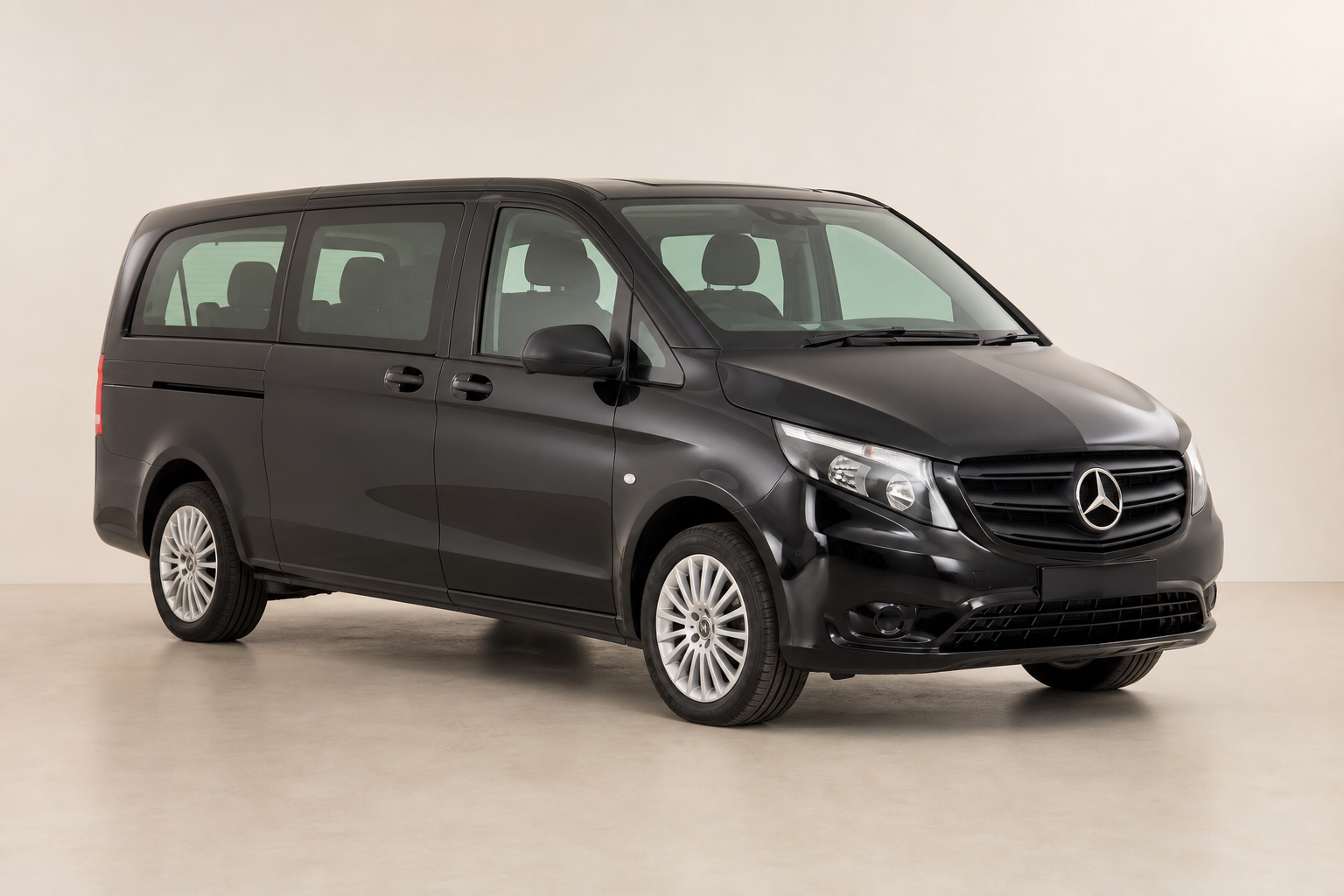
Oversized luggage should never be treated as an ordinary suitcase in a transfer request. Long, rigid, fragile, or mobility-related items affect how passengers and bags can safely fit in the assigned vehicle.
Describe the equipment
Give the number and type of items. For surfboards, bicycles, skis, golf bags, or instrument cases, include approximate length and whether the equipment is packed in a protective bag. For a wheelchair, say whether it folds and whether the traveller needs assistance transferring to a seat.
Count normal suitcases separately. “Two passengers with surfboards” does not explain whether there are also four large cases and cabin bags.
Why the vehicle class may change
Published passenger capacities do not describe usable luggage space. A van or minibus may be recommended even for a smaller party when the equipment is bulky. Roof transport or external racks should never be assumed unless specifically confirmed.
Child and mobility equipment
Declare pushchairs, child seats, walking aids, and wheelchairs before assignment. Specify the requested child-seat type and remember that availability must be confirmed. Explain any accessibility need that affects boarding or the meeting point.
Check the final arrangement
The written confirmation should list the declared equipment and vehicle class. If equipment changes after confirmation, contact the coordinator before pickup; the original vehicle may no longer be suitable.
Clear measurements and totals are more useful than describing the group as travelling “with luggage.” They allow capacity to be checked while there is still time to change the vehicle request.